Why You Should Buy a Second Home in Aruba: Locations, Costs, Taxes & Yield
Aruba is known as one of the best travel destinations in the Caribbean, which makes it a coveted location for real estate investment. Many interested buyers from places like the US, Europe, and South America are buying second homes in Aruba.
Non-residents buy on the same terms as Aruban residents, with no ownership restriction and no special permit. The complexity lies in the suitable location, annual ground tax, cross-border filing obligations, and the daily operation of a home you visit three weeks a year. This guide covers where you should buy, what you pay to buy, what you owe every year, and what the property can realistically earn.
Best Vacation Home Location in Aruba
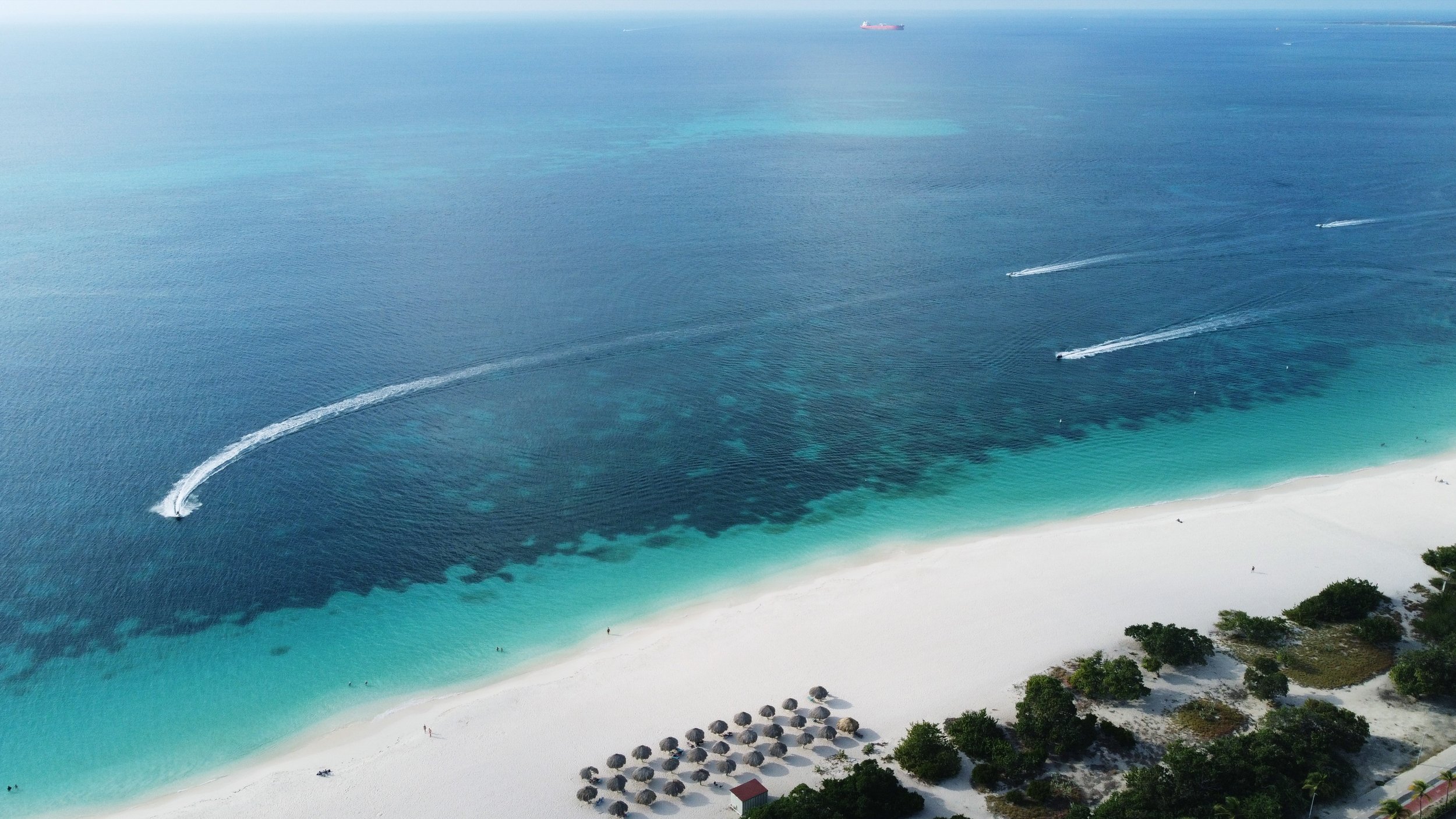
Aruba's rental demand concentrates on a short stretch of the west coast, and the area you buy in shapes both who books the home and how often.
| Area | Character | Suits |
|---|---|---|
| Palm Beach | High-rise strip with restaurants, shops, and casinos within walking distance | Couples and owners who want steady year-round bookings |
| Eagle Beach | Low-rise, wide sand, calm water, quieter than Palm Beach | Families with young children and multi-generational groups |
| Noord | Inland and residential, close to schools and healthcare | Owners wanting more square footage per dollar |
| Malmok | Rocky shoreline known for snorkeling and diving | Couples and small active groups |
| Savaneta | Former fishing village on the south coast, low density | Owners prioritizing quiet over rental volume |
Walking distance to a busy beach supports higher occupancy and a shorter booking window, while inland and southern properties draw longer stays from guests who have already decided on the island. Meanwhile, multi-generational groups are the clearest exception, because bedroom count and outdoor space matter more to them than proximity to a restaurant strip.
Why Buy Residential Property in Aruba?
The pros of buying a second home in Aruba include:
The least expensive property per square meter in the Caribbean.
A heavy tourist footprint makes it an ideal location for earning significant profits.
The real estate market is stable and little to no speculation.
A Booming Tourism Industry
Tourism is responsible for about ~70% of Aruba's GNP. Moreover, North American tourists make up about 74.4% of those visiting Aruba. As a result, this Dutch Caribbean island is a great candidate for having a second home. Aruba is also a part of the Kingdom of the Netherlands. Therefore, it enjoys close political and diplomatic ties with much of Europe. This provides Aruba with a more secure environment, unlike other Caribbean islands. Aruba also has more direct access to the US and Canada.
A Healthy Real Estate Market
Since the world opened up post-Covid, there has been a sharp upward trend in real estate prices in Europe and North America. Aruba property prices, in fact, are also going up faster, but it is still incomparable to other famous tourist locations making it a good time to invest in.

The market has seen a boom in the past couple of years, and prices have been going up consistently at about 4% year-over-year in 2022. And foreigners can buy a second home in Aruba with no ownership restrictions, though buying does not grant residency.
No restriction on non-resident ownership. Buyers from the United States, Canada, and the Netherlands follow the same purchase process as Aruban residents.
Closing costs typically add 7% to 10% on top of the purchase price, covering transfer tax and notary fees.
The Aruban florin is pegged to the US dollar, so a US buyer carries no currency exposure on the purchase or on rental revenue.
Non-resident owners pay an annual ground tax of approximately 0.6% of assessed value, plus separate taxes on any rental activity.
A Great Return on Investment
Aruba's appeal as an asset rests on three structural features rather than on any single market cycle.
The island sits outside the main hurricane belt, which removes a risk that shapes insurance cost and seasonal demand across much of the Caribbean.
The Aruban florin is pegged to the US dollar, so a North American owner carries no currency exposure on either the asset or its revenue.
Aruba is small, with a finite west-coast shoreline and limited developable beachfront, which constrains new supply in exactly the corridors guests book most.

How to Buy Second Home in Aruba
The purchase runs through a civil-law notary, and the sequence is short. Most transactions follow five steps:
Set the budget: Include closing costs and the annual ground tax, not just the purchase price. Non-residents financing locally should expect a higher deposit requirement than residents.
Choose the property type and corridor: Condos, standalone homes, and pre-construction units carry different holding costs and different rental profiles.
Submit a written offer: If the seller accepts, a purchase agreement is drafted and signed by both parties, then forwarded to the notary.
Pay the deposit into escrow: Buyers typically place 10% of the purchase price with the notary within roughly 10 business days of signing, held in escrow until transfer.
Complete the transfer: The notary verifies title, settles transfer tax, and registers the deed. Pre-construction purchases follow a staged payment schedule instead.
Freehold (eigendom) versus long-lease land (erfpacht)
Not all Aruban property is freehold. Several premium areas, including Malmok, Tierra del Sol, and parts of Palm Beach, sit on long-lease land known as erfpacht.
The lease typically runs 60 years with automatic extension, so it is not a wasting asset in the way a short lease would be.
An annual lease fee is payable to the government, set by the Directorate of Land Administration.
The fee can be reset on renewal, which is the main long-term variable to model.
What does it cost to buy a second home in Aruba in 2026?
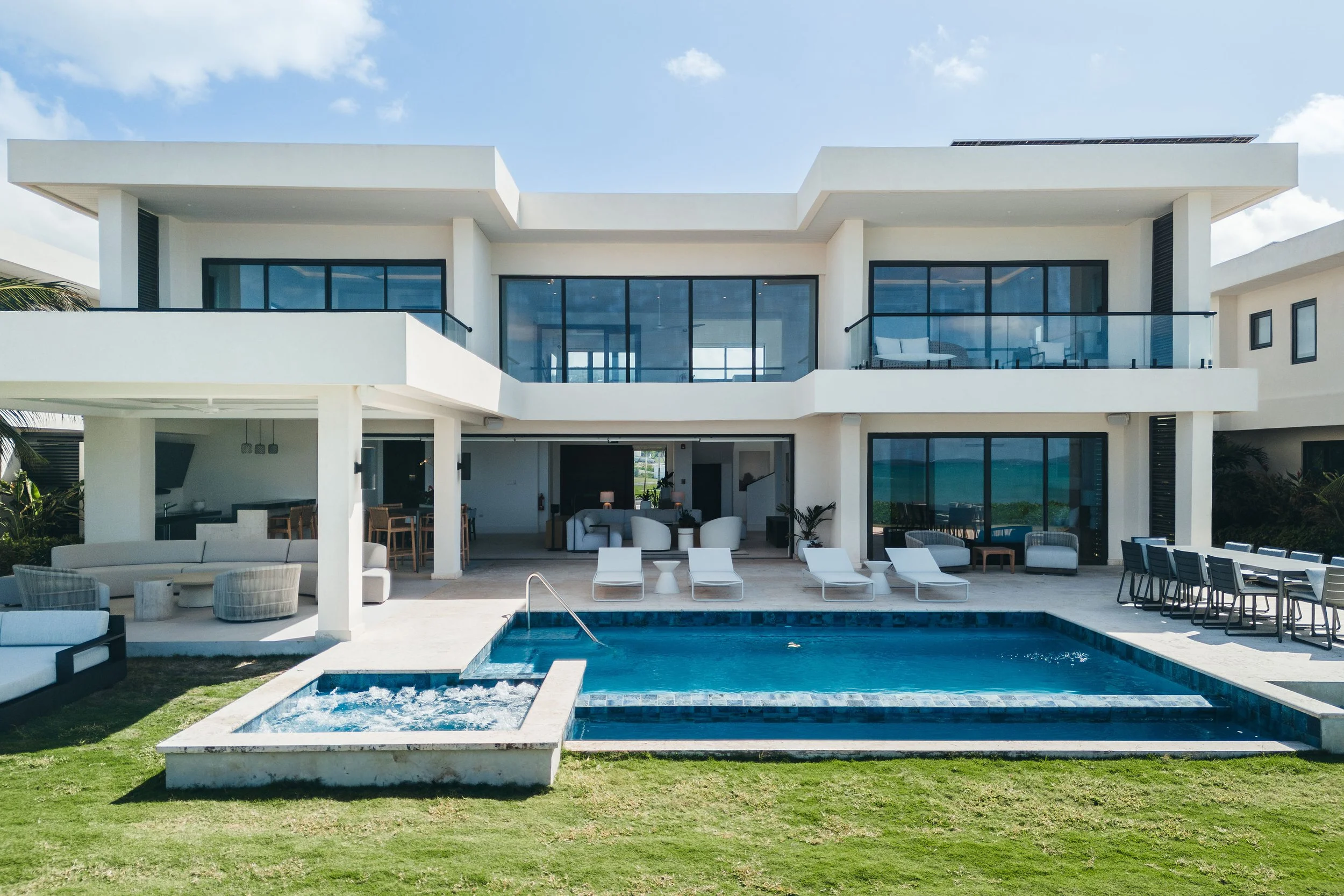
Budget 7% to 10% of the purchase price in closing costs on top of the price itself. That figure covers two main items: transfer tax and notary fees.
Transfer tax is charged at approximately 3% on properties below AWG 250,000 and approximately 6% above that threshold, and notary fees run around 1% of the selling price. Entry prices vary by corridor, with Palm Beach and Eagle Beach commanding a premium over inland Noord.
One structural advantage for North American buyers is that the Aruban florin is pegged to the US dollar. Therefore, the price you agree in USD is the price you pay, with no exchange-rate drift between offer and closing and no currency risk on rental revenue later.
| Cost Item | Typical 2026 Range |
|---|---|
| Deposit on signing | ~10% of purchase price |
| Transfer tax | ~3% below AWG 250,000, ~6% above |
| Notary fees | ~1% of selling price |
| Total closing costs | ~7% to 10% |
All figures and travel details are for reference only and may change. Please confirm current details with our team before booking or signing.
This information is general and does not constitute financial, tax, or legal advice. Please consult a qualified advisor in your country of residence.
The purchase price is the number buyers anchor on, but it is not the number that decides the return. Our guide to the costs of Caribbean investment property ownership covers the rest.
Which taxes apply to a second home in Aruba?
Non-resident owners pay a flat annual ground tax (grondbelasting) of approximately 0.6% of assessed value, at any value. Aruban residents are taxed on a progressive scale instead, which is why the rate a local broker quotes may not be the rate that applies to you.
Liability is set by who owns the property on 1 January and is not prorated if you sell mid-year. Assessments run in multi-year cycles, and owners must notify the Tax Authorities after renovations that raise value.
Renting the home out adds a second layer:
Personal income tax. Owners who rent out an Aruban property must file an annual Aruba income tax return declaring rental revenue, with certain costs deductible.
Tourist levy. Short-term rental carries a levy of approximately 12.5% of the nightly rate, plus a per-room, per-night environmental levy.
BBO turnover tax. Long-term rental is subject to BBO unless the property is a primary residence. Ancillary services billed to the guest generate BBO as well.
Aruba also introduces fiscal incentive measures tied to specific investment categories from time to time. So, check with a local advisor whether your purchase qualifies before you sign.
Besides, filing is required whether or not the property turns a profit, which surprises owners who assume a quiet year means nothing to declare. Failing to notify the Tax Authorities of a value-raising renovation carries its own exposure.
This is usually where cross-border owners stop handling compliance themselves, because getting it wrong from 2,000 miles away costs more than getting help.
Can a second home in Aruba pay for itself?
It can, and the variables that decide it are narrower than most owners expect. Three factors do most of the work:
Walking distance to sand: Minutes matter more than views on how a property prices against its neighbors.
Bedroom count: Multi-generational groups and families drive the premium end of the market, and three-bedroom homes reach a different guest than one-bedroom condos.
Pricing against live demand: A rate that moves with real booking pressure captures revenue that a fixed seasonal rate leaves behind.
Aruba's high season runs roughly mid-December through mid-April, and Dutch travelers create a second distinct peak in July and August. So a headline occupancy number means little without both.
As one illustration, an Eagle Beach condo in our portfolio delivered approximately $190,000 in annual yield at 78% occupancy. Note that past performance is not a forecast, and results vary by property and corridor.
Who runs the property when you are not on the island?
The work does not pause when you fly home since the operation system and tax filing continues whether you are in Aruba or in New Jersey, and that gap is where second homes quietly underperform.
In practice, two commercial models dominate:
A flat recurring fee is paid regardless of what the property earns, so the operator's income is stable whether occupancy is 40% or 80%.
A performance commission is taken as a percentage of revenue, which ties what the operator earns to what the owner earns.
Neither is automatically better, but they create different incentives, and it is worth knowing which one you are signing.
Bocobay is a luxury property and vacation rental operator managing homes across Aruba, Curaçao, the Dominican Republic, and Jamaica. Our full turnkey program covers local ground teams, revenue management, cross-border tax handling, and monthly reporting through the "My Bocobay" portal.
You can see how the vacation rental management program works, or read the island-specific detail for Aruba property owners.
Conclusion
Aruba is straightforward to buy into. Closing costs are predictable, the currency is pegged, and no permit stands between a foreign buyer and a title. Owning from abroad is the harder half, and it is where the return is actually decided: the 0.6% ground tax, the annual filing, and the operational load of a home you see a few weeks a year. Model those before you model the purchase price.
Frequently Asked Questions
Owning property in Aruba does not extend your permitted stay. Entry limits apply as they do to any visitor, and longer stays require authorization through DIMAS, Aruba's immigration department. Confirm the current entry period and long-stay routes with DIMAS directly before planning extended visits.
That depends on the corridor, the property configuration, and how the home is operated. Aruba's tourism calendar is unusually even across the year, which supports rental demand outside a single peak season. Net yield is gross revenue minus ground tax, rental taxes, and operating cost, so occupancy alone is not a reliable guide.
Yes. Renting out an Aruban property creates a filing obligation, and owners must declare rental revenue on an annual Aruba income tax return. Short-term rental also carries a tourist levy of approximately 12.5% of the nightly rate plus a per-night environmental levy. Long-term rental is generally subject to BBO turnover tax.